22 de setembro de 2020 · Página · 3xf
Fernando Fagundes Ferreira
A new approach to lawfare practices in Brazil's Reconstruction and Transformation Plan
A foundation of any Brazilian Reconstruction Plan should have as its main axis the answer to the question: "What to do to rescue the Brazilian Constitution of 1988?"
FERNANDO FAGUNDES FERREIRA
For those who have not read, for the sake of truth, the Workers Party (acronym PT in Portuguese) document entitled "Plan of Reconstruction and Transformation of Brazil", released on Monday, September 21, is not exactly a Plan, but a declaratory mix of intentions and ideas, in a format organized like a magazine, which contains several conjuncture problems considered a priority by the chiefs and supposedly for their militancy. Thus, because it has no concern to present detailed proposals typical of an urgent and necessary national development plan, to promote an effective global change on the smoky horizon of the national reality, the Plan can be considered as a "letter of government intentions", a born product of political-electoral marketing.
The first thing one thinks about a Reconstruction Plan is that it exudes strategic content and processes and thus focuses on risk management. The most obvious strategy of the Reconstruction Plan is to solve the country's problems by returning to power. All right, but what strategies will be to succeed in implementing the possible changes pointed out as necessary?
The PT leaders have already had three opportunities for public administration at the federal level and we Brazilians, unfortunately, came to the Dante hell a lot because of mistakes made. We do not intend to return in this article to the cold cow about the successes and missteps of the coalition governments registered in those opportunities, a subject closed in the annoying discussion about the so-called "errors of the PT", arising from a supposed "lack of self-criticism". We intend to overcome this bafflement.
There is no doubt that "lulopetista" governments were phenomenally better than previous governments in all respects. Although is also attributed to its "governance strategy" the gradual construction for the success of the coup d'état in 2016 and the rise of fascism driven under the body-politic of narco-state following guidelines dictated from the outside into Brazil and internalized by the Brazilian Mammonite elite, to favor the accumulation of private capital to the detriment of the nation's pauperization.
The current "fakecracy" of Brazil is not the sole fault of the PT. By presenting a Plan for Reconstruction and Transformation of Brazil, without showing how all this contagious and sick scenario can be treated after the elections, as a priority to improve the supremacy of the public interest, at the very least, we get the feeling that the situation is serious. Brazilians can pass at any time to the level of despair and social upheaval. Democracy in Brazil is suffering and with it, the most suffering is the Brazilians.
A foundation of any Brazilian Reconstruction Plan should have as its main axis the answer to the question: "What to do to rescue the Brazilian Constitution of 1988?" The expression "Constitution of 1988" appears six times in the 220-page document of the PT, and in the last of them (perhaps the most innovative) uttered in the extension of prerogatives to call referendums and plebiscites to the popular initiative and the President of the Republic. In the current panorama of instability of the democratic regime, we can imagine how risky consultations could be on "chloroquine", "burned in the amazon", "slave-like labor", "death penalty", "criminal responsibility age", "mandatory vaccination", "war on Venezuela", and other "sensitive public issues" alike.
The PT has often left a controversial legacy with these teleological bets that end up turning against the people or against the party itself. The laws of Clean Record, award-winning whistleblowing, money laundering, and other actions resulted in banana peels thrown in the path of the democratic regime. Being punished by the legislation itself that helped consolidate is something schizophrenic, but in Brazil, nothing happens by chance. Therefore, it is worth keeping an eye on the shot does not backfire or ricochet about it: good legislation does not mean that it is applied properly, because there has to be respected for the Constitution.
The Reconstruction Plan edited by the Perseu Abramo Foundation invokes in one of its hottest parts the "Radicalization of democracy and refoundation of the state". Expectations about the title generate a bit of frustration about the content. The main problems related to democracy are brushstrokes, while the important thing would be to bear in the paints about what are the strategies of the PT to transform the Brazilian scenario from muddy water from the bottom of well to crystal-clear drinking water.
The minimally recommended processes within the Democratic State of Law are sanitation and asepsis in the social contract between the people and the State. Brazilian people need to understand the national situation with full transparency. Not only the PT, but it is also up to any political party to show its weapons and the instruments to face good combat. On the improvement of democracy, the Plan advocates:
Popular sovereignty presupposes more than the free exercise of the vote and the respect of the institutions to the outcome of the ballot boxes. It is necessary a new quality of democracy in Brazil, effectively combine representative democracy and new forms of exercise of participatory democracy, and face the devastating process of disqualification of politics and delegitimization of institutions, under penalty of worsening of the crisis of political representation and the advance of fascist and authoritarian forces (in Plan of Reconstruction and Transformation of Brazil, 2020, p.185).
It is partly cryptic for the PT guideline to "radicalize" democracy. The concept of "popular sovereignty" is unequivocal, although almost fictitious if we think of the reality emanating from the National Congress where the majority of the representatives are very wealthy white men. The "free exercise of the vote" is a right connected to the imposition of compulsory. On the other hand, "the respect of institutions for the outcome of the polls" goes far beyond a sine qua non condition to the radicalization of democracy. Our electronic voting machines are outdated and reckless.
The entire Brazilian electronic voting system was born by the autocratic will of leaders of the PSDB governments associated pari passu to the ministers of the STF / TSE. Electronic automation had its introduction in the Brazilian elections by decision engendered with the participation of intelligence agencies (is preferable to say "smart agencies"?) and American technology companies created for this purpose. It has become a card up its sleeve as a powerful instrument of control of the election (and the results). It's always been a scientifically vulnerable system and every day that's gone by it's become pure scrap. A real risk to democracy and probably the worst of the frauds against "popular sovereignty". No word in the PT document on this fundamental theme for a better democracy.
How then to promote a "new quality of democracy in Brazil"? The PT suggests that the way is "to face the devastating process of disqualification of politics and delegitimization of institutions". This is rhetoric proper to party-political marketing that reproduces a discourse emptied of pragmatism. It is not politics and/or institutions that are disqualified and delegitimized, respectively, are their operators. The processes are defined in legislation and form the legal knowledge base for the activities of institutions. They're working fine. And producing poorly.
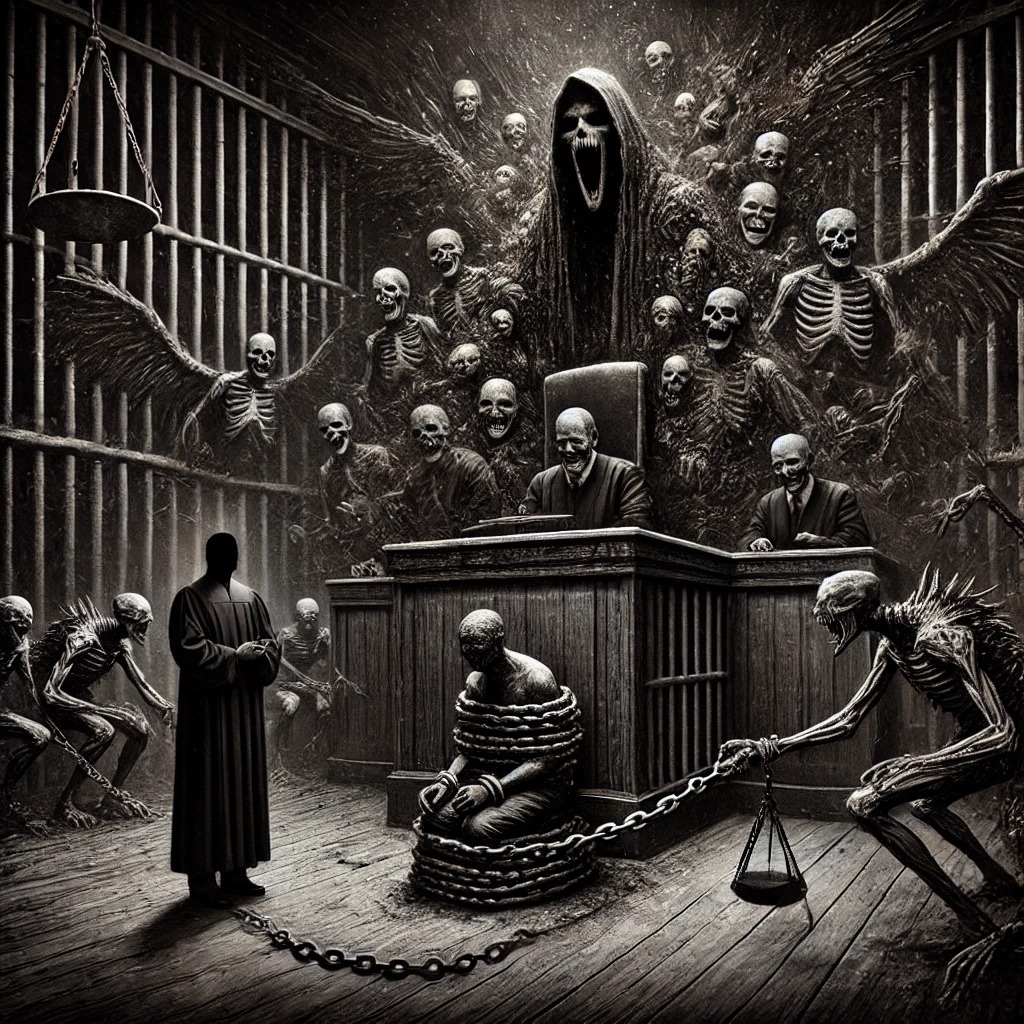
The problems affecting all ordinary citizens occur when the operators of the powers constituted auction the public interest in the private interest. This is the risk to democracy despite the concern about legal chaos and insubordination to the Magna Law because the representatives of justice have also politicized and began to legislate and execute, in addition to judging. The issue of the "legal war" that embodied the Temer and Bolsonaro governments in the name of the "fight against corruption of Lulopetista governments" was baptized and incorporated by left-wing rhetoric as one of the characteristics of "lawfare" practices.
The term "lawfare" appears only twice in the PT document, referring to the context of the peremptory removal of former President Lula from the 2018 election race after scandalous and successive legal decisions orchestrated in the context of the performance of Operation Car Wash ruled by former judge Sérgio Moro and his trained prosecutors (as revealed by the publication Intercept Brasil, in the newspaper series Vaza Jato, coordinated by journalist Glen Greenwald). The following excerpts on lawfare from the Plan are:
They were successful governments, even with mistakes and shortcomings. They replaced the failure of neoliberal policies of the 1990s and were replaced after the 2016 coup against former President Dilma and lawfare against former President Lula, by the same model and the same policies that had already failed. (in Brazil's Reconstruction and Transformation Plan, 2020, p.35 - our griffin).
In the case of Brazil, this general picture of the weakening of democracies and representation systems was greatly aggravated by the 2016 coup against former President Dilma Rousseff, the lawfare against former President Lula and the Bolsonaro government, which has a clearly authoritarian and undemocratic nature. (in Brazil's Reconstruction and Transformation Plan, 2020, p.52 - our griffin)
The two mentions of "lawfare against former President Lula" imply a worrying conclusion: the PT thinks that the lawfare only existed or exists against the former president of the PT? Well, then we have to explain what lawfare is. Quite simply, lawfare would be the exchange of the Magna Law for something similar to the anecdotal Law of Gérson - the latter that would advocate as legal status take advantage in everything possible. The lawfare is something ancient, historical, that exists to a lesser and greater degree, in a proportion and intensity directly linked to the (dis)respect for the Constitution.
Lawfare translates into the issue of moral legitimacy in decision-making in the sovereign public interest. The guardian of the Constitution is the Supreme Court/TSE, whose institutional legitimacy must be sacred. Thus, what would be the way to rescue the moral legitimacy that would be expected from the action of the Supreme Court / TSE? Bolsonarism spokespeople have already expressed their support for "sending a soldier and a cable mounted on a jeep" to solve the problem of the Brazilian Supreme Court. This is the typical plan of a fascist regime. An imminent risk.
This intolerance to democratic debate has been a permanent problem in the Democratic Rule of Law and needs to be addressed in any Democratic Government Plan. Hence the importance of presenting to the national and international debate all issues closely related to lawfare practices. This is how the #Lawfare4All portal was born, to be a democratic catalyst of opinions and information that add due value to this debate from six strategic categories of evaluation: persecution, disinformation, geopolitics (game theory), neoliberalism, ideology, and sabotage.
The answers to the questions related to the previous categories of lawfare become strategic to the PT`s Reconstruction and Transformation Plan:
· How can we avoid the criminalization of opinion without the fundamental guarantee of freedom of expression?
· How to curb disinformation without promoting the democratization of the media or defending #FreeAssange?
· How to succeed on the board of nations without being prepared to enter the game?
· How to increase GDP without directing investments to strategic means of production?
· How to face political-ideological radicalism without authoritarian solutions?
· How to stimulate development and national sovereignty amid the sabotage of hybrid warfare?
It is very important to read about what the PT, the main opposition party to the Bolsonaro government, called the "Reconstruction and Transformation Plan of Brazil". We gave ourselves the right to accept the suggestion of former President Lula and carried out this task as an exercise of citizenship to offer the strategic categories of evaluation of the #lawfare4all on some important issues of the Plan. We are engaged, multi-party, sincere progressive, and republican citizens by essence. We want to feed and participate in the debate.

Fernando Ferreira is the compiler of the website lawfare4all.wordpress.com that brings together the organized civil society in the END #LAWFARE4ALL CAMPAIGN
About Us
We want to highlight instruments for improving democracy and preserving the Democratic State of Law, often violated by actors who use #lawfare as a method of diffuse and deadly warfare against citizens, the collectivity, the enterprises, the people and the developing nations.
We are part of the Pelicano Network for the Defense of Human Rights and the Brazilian Institute of Political and Administrative Constitutional Studies - IBEPAC. Bring your NGO to our network.