Lawfare
Julian Assange: Press Freedom, Psychological Pressure, and the Frontiers of Geopolitical Lawfare
Fernando Fagundes Ferreira · Founder & Research Director, Lawfare4All · April 18, 2026 · 16 min
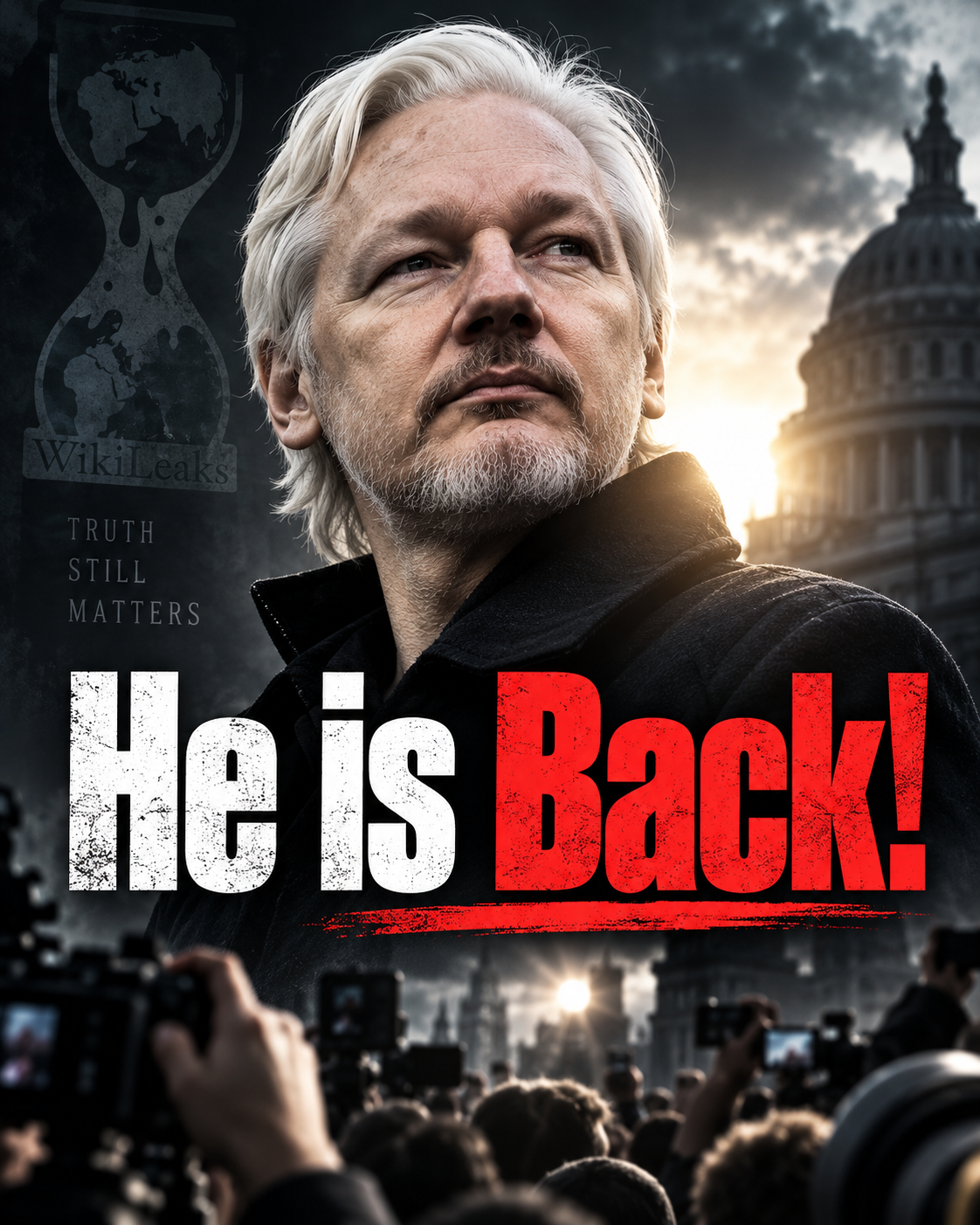
Julian Assange’s trajectory stands at the intersection of journalism, state power, and the evolving architecture of law in the digital age. What began as a radical experiment in transparency through WikiLeaks developed into one of the most consequential confrontations between a publisher and state systems in the 21st century. Over time, the case transcended its initial legal contours and became a revealing lens through which to examine the limits of press freedom, the reach of geopolitical lawfare, and the role of media institutions under pressure.
When WikiLeaks released classified military logs and diplomatic cables in 2010, it did more than expose isolated incidents. It revealed patterns—systemic contradictions between official narratives and operational realities. Wars that had been publicly framed in strategic language were suddenly visible in their granular complexity. Diplomatic communications exposed the informal mechanics of international relations. For a brief but decisive moment, the asymmetry between state secrecy and public knowledge was disrupted at scale.
Crucially, this process was not carried out in isolation. Major international media organizations collaborated directly with WikiLeaks in analyzing and publishing the materials. Newspapers such as The Guardian and The New York Times did not merely report on the leaks; they participated in their editorial interpretation and dissemination. At that stage, Assange was not positioned as an outsider to journalism, but as a central actor in one of the most significant investigative efforts of the modern era. The public interest value of the disclosures was broadly acknowledged.
Yet as the political and legal consequences of those revelations intensified, this alignment began to fracture. The shift was not immediate. It occurred gradually, through changes in tone, emphasis, and framing. The focus moved away from the structural implications of the disclosures and toward the figure of Assange himself—his conduct, his personality, his legal vulnerability. This transformation was subtle but decisive. A systemic question about transparency became, increasingly, an individualized narrative about liability.
Parallel legal developments contributed to this reframing. The Swedish proceedings, regardless of their legal trajectory, played a pivotal role in restricting Assange’s movement and reshaping media discourse. They provided an alternative narrative axis that diverted attention from the content of the leaks to the circumstances of the individual behind them. Over time, the cumulative effect was a fragmentation of the original narrative. The central question—what had been revealed—was progressively overshadowed by questions about who Assange was and what he had done.
The years spent inside the Ecuadorian embassy in London represented a peculiar form of confinement. Assange was neither free nor formally detained, neither fully visible nor entirely absent. It was a prolonged condition of suspension, marked by legal uncertainty, spatial restriction, and increasing isolation. During this period, his capacity to function as a publisher or journalist was effectively neutralized. What had begun as a moment of informational rupture transitioned into a prolonged state of containment.
When Ecuador revoked asylum in 2019 and Assange was arrested by British authorities, the case entered a more overtly punitive phase. His transfer to Belmarsh, a high-security prison, intensified concerns about proportionality and human rights. It was at this stage that the intervention of Nils Melzer, United Nations Special Rapporteur on Torture, became particularly significant. Melzer concluded that Assange had been subjected to "psychological torture," pointing to the cumulative effects of isolation, legal pressure, public stigmatization, and prolonged uncertainty.
This human rights dimension cannot be fully understood without considering the broader environment of surveillance and intelligence activity surrounding the case. Investigations and court-related disclosures have indicated that Assange was subject to extensive monitoring during his time in the Ecuadorian embassy, including the recording of meetings with legal counsel and visitors, raising serious concerns about the violation of attorney-client privilege and due process guarantees.
Reports associated with the Spanish company UC Global, which provided security services to the embassy, suggested that surveillance extended beyond routine security measures and may have been linked to external intelligence interests. These revelations reinforced the perception that the case operated not only within formal legal channels, but also within a wider ecosystem of intelligence gathering and strategic pressure.
Within this context, Assange himself has alleged that a range of tactics were employed to monitor, influence, and potentially compromise his position. While such claims vary in their degree of verification, they are consistent with a broader pattern of sustained psychological and institutional pressure identified by human rights observers.
Taken together, these elements contribute to an understanding of the case in which legal proceedings, surveillance practices, and narrative dynamics converge. The result is a form of pressure that extends beyond courtroom boundaries, raising fundamental questions about the limits of lawful state conduct in cases involving politically sensitive disclosures.
The role of the media in this trajectory is particularly revealing. Few cases have exposed so clearly the tensions within the journalistic field when confronted with direct implications for its own practices. In the early phase, the collaboration between WikiLeaks and major outlets reflected a shared commitment to exposing information of public interest. However, as legal risks escalated, this relationship became increasingly strained.
What followed can be described not as a uniform abandonment, but as a fragmented and uneven response. Some journalists and organizations continued to raise concerns about press freedom and due process. Yet the broader media ecosystem displayed a marked reluctance to sustain a coordinated and forceful defense of the principles at stake. Coverage became more episodic, more cautious, and often more narrowly focused on procedural developments.
This shift had significant consequences. It contributed to what might be termed a contraction of the narrative space. The broader implications of the case—particularly the potential criminalization of publishing activities—were not consistently foregrounded. Instead, the dominant framing emphasized legal accountability, technical aspects of extradition, and the formal structure of the proceedings. The systemic question of whether publishing truthful information could be prosecuted under national security laws was often displaced or diluted.
In this sense, the media did not simply report on the case; it participated in the shaping of its meaning. Through selective emphasis, omission, and reframing, it influenced how the case was understood by the public. The transition from collaborative partner in disclosure to cautious observer of prosecution reflects a deeper structural tension: the difficulty of maintaining journalistic solidarity when the boundaries of legality are themselves in dispute.
From a Lawfare4all perspective, this dynamic is not incidental. It illustrates how media systems can function as active components within broader configurations of power. The interplay between legal action, narrative construction, and institutional behavior contributes to the redefinition of legitimacy. In the Assange case, the fragmentation of media response played a role in normalizing a situation that, in other circumstances, might have provoked more sustained institutional resistance.
At the same time, the legal architecture surrounding Assange expanded across jurisdictions. Charges brought by the United States under the Espionage Act, extradition proceedings in the United Kingdom, and the earlier phase of asylum in Ecuador form a transnational chain of legal actions. This configuration exemplifies geopolitical lawfare: the projection of legal authority beyond territorial boundaries, supported by diplomatic alignment and institutional cooperation.
In this context, law does not operate in isolation. It is embedded within a broader strategic environment in which states seek to manage risks, signal intentions, and maintain control over information flows. The Assange case demonstrates how legal mechanisms can be mobilized as part of this environment, producing effects that extend beyond the immediate scope of the charges.
What makes the case particularly consequential is its multi-layered nature. It is simultaneously a legal dispute, a human rights concern, a media crisis, and a geopolitical signal. Each of these dimensions interacts with the others, creating a complex and evolving situation in which the boundaries between law, politics, and communication become increasingly blurred.
Ultimately, the significance of the Assange case lies not only in its outcome, but in what it reveals about the transformation of democratic systems under conditions of informational conflict. It raises fundamental questions about the limits of state power, the resilience of journalistic institutions, and the capacity of legal frameworks to adapt to new forms of transparency.
In the digital age, the struggle over information has become a central arena of power. The Assange case stands as a defining example of how legal processes, media narratives, and geopolitical interests can converge to reshape that arena. It forces a reconsideration of what it means to publish, to know, and to hold power accountable—and of the costs that such actions may entail in a world where the boundaries of law are continuously renegotiated.
Julian AssangeLawfarePress FreedomGeopolitical LawfareWikiLeaksExtraditionHuman RightsMedia NarrativePsychological Pressure